BiocircuitsUniversity of Seville
Home / Research areas

Research areas

Explore our instruments and the experiments behind them, from wireless measurements in culture wells to wearable electrodes and the electrical characterisation of materials.

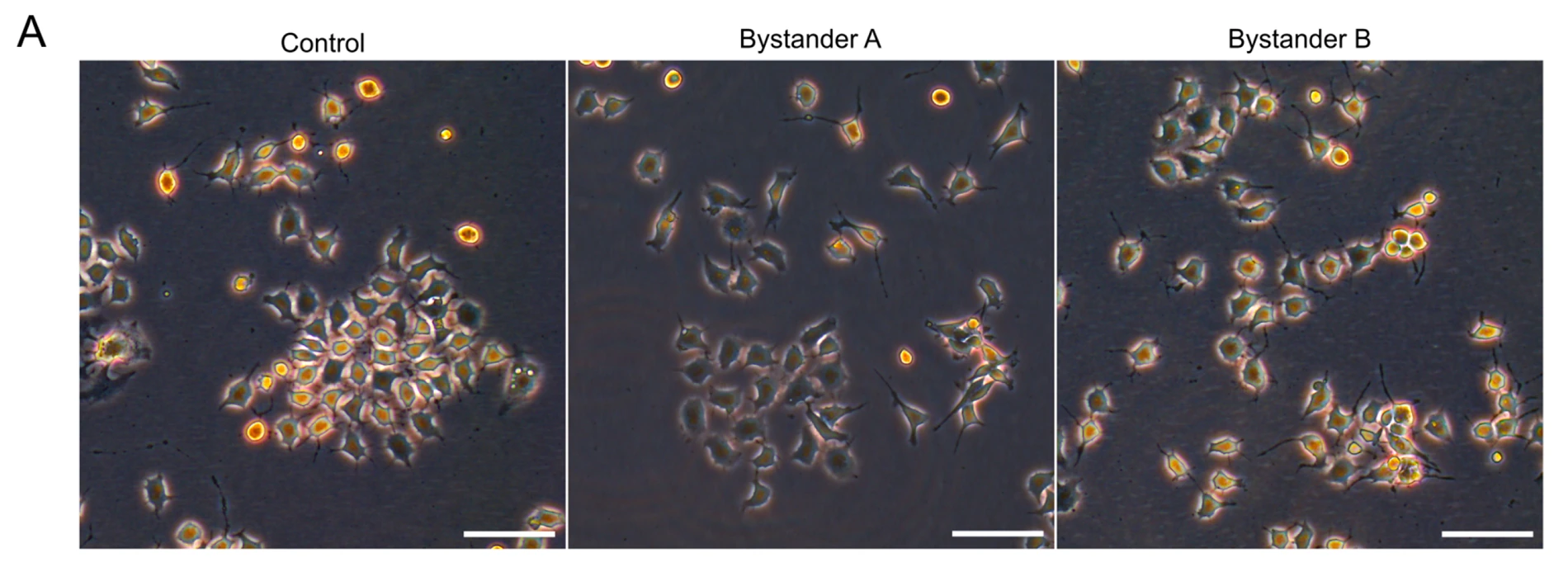
Phase-contrast images of mouse N2a cells. The control is compared with cultures exposed to medium collected immediately after stimulation (A) or 24 hours later (B). Scale bars, 50 µm.
Phase-contrast images of mouse N2a cells. The control is compared with cultures exposed to medium collected immediately after stimulation (A) or 24 hours later (B). Scale bars, 50 µm. Martín et al., Biosensors (2026) · CC BY 4.0

Cellular bioelectronics

What happens to a cell culture after electrical stimulation? In E-CELL, researchers in electronics and cell biology worked together to design the chamber, deliver the stimulus and assess the response under the microscope.

Building the culture chamber · Examining cells after stimulation · Can the medium carry a signal?

Read the study
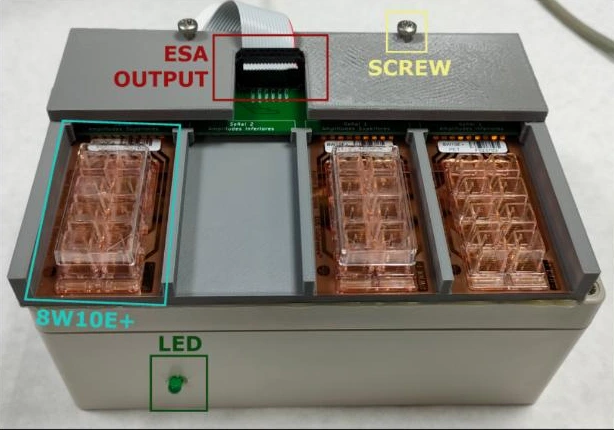
Assembled electrical stimulation system with culture wells fitted into the holder.
Assembled electrical stimulation system with culture wells fitted into the holder. Martín Fernández (2026) · CC BY 4.0

Electronic instrumentation

How do you follow the growth of a cell culture without taking it out of the incubator? We design circuits that turn changes at a sensing electrode into a signal that can be recorded over time.

Electronics for cell stimulation · A programmable AC current source · Tuning the readout to the assay · The culture well as part of the circuit

Read the study
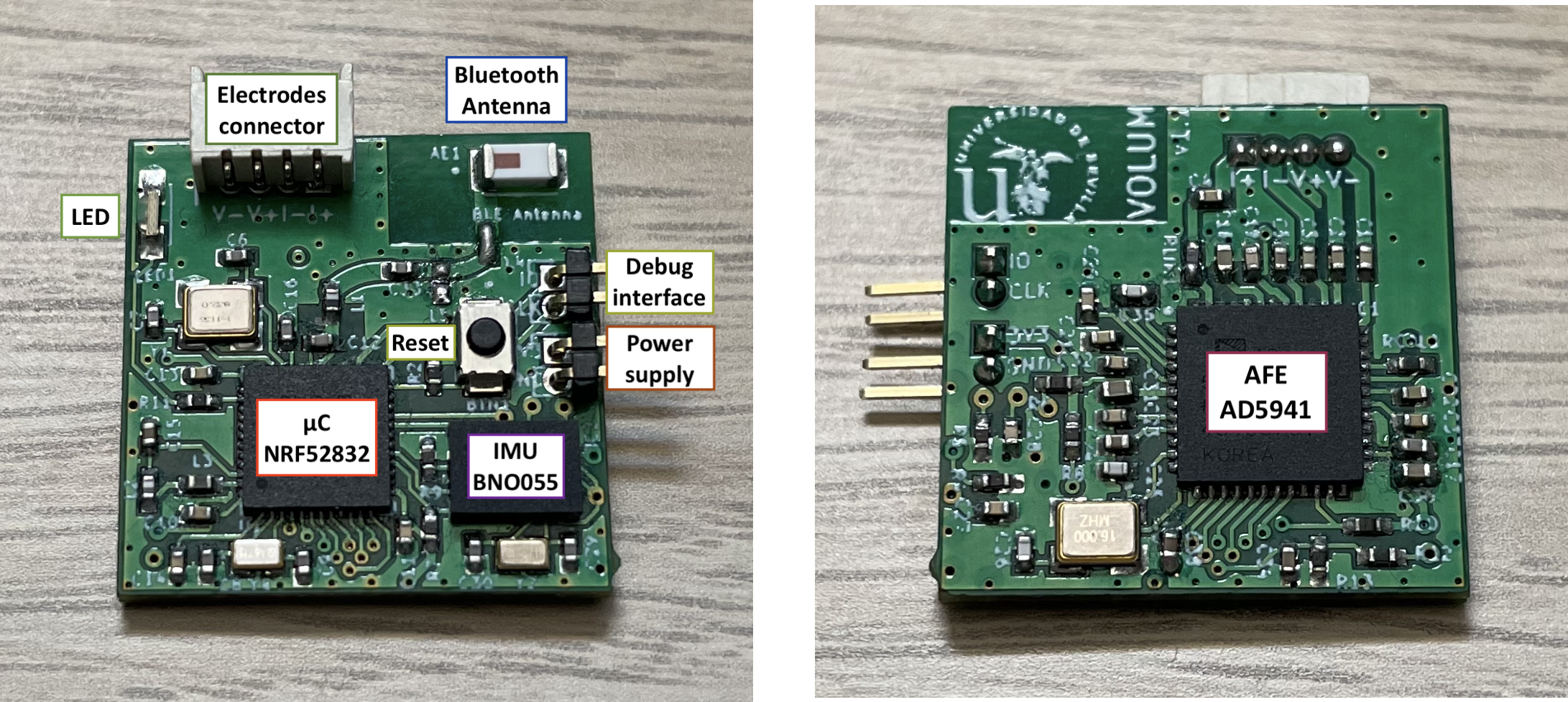
Both sides of the first VOLUM prototype circuit board.
Both sides of the first VOLUM prototype circuit board. Fernández Scagliusi (2024) · CC BY-NC-ND 4.0

Wearable bioimpedance spectroscopy

Fluid accumulation in the lower leg changes how it conducts electricity. With the clinical team at Hospital Universitario Virgen del Rocío, we investigate whether repeated ankle measurements can help track oedema in heart failure.

Inside the VOLUM prototype · From rigid contacts to a textile ankle band · Relating impedance to leg volume

Read the study
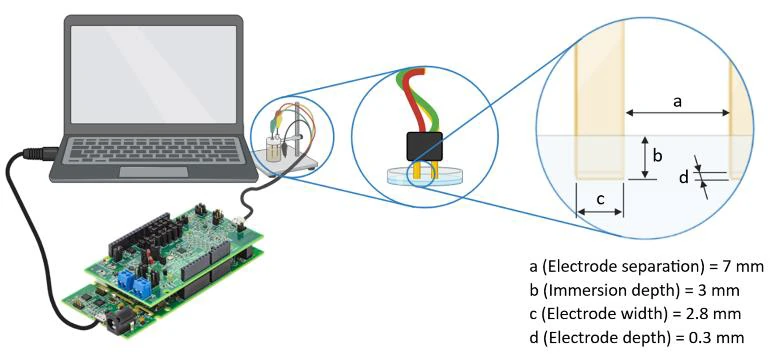
Experimental setup for measuring the impedance of cryoprotectant solutions.
Experimental setup for measuring the impedance of cryoprotectant solutions. Alcalá et al. (2024) · CC BY 4.0

Measurements for cryopreservation

Cooling and rewarming pose different measurement problems. Working with colleagues in applied physics and pharmacy, members of Biocircuits have studied how to monitor cryoprotectant concentration and how to model heat delivery during rewarming.

Reading the concentration electrically · Modelling rewarming with focused ultrasound

Read the study
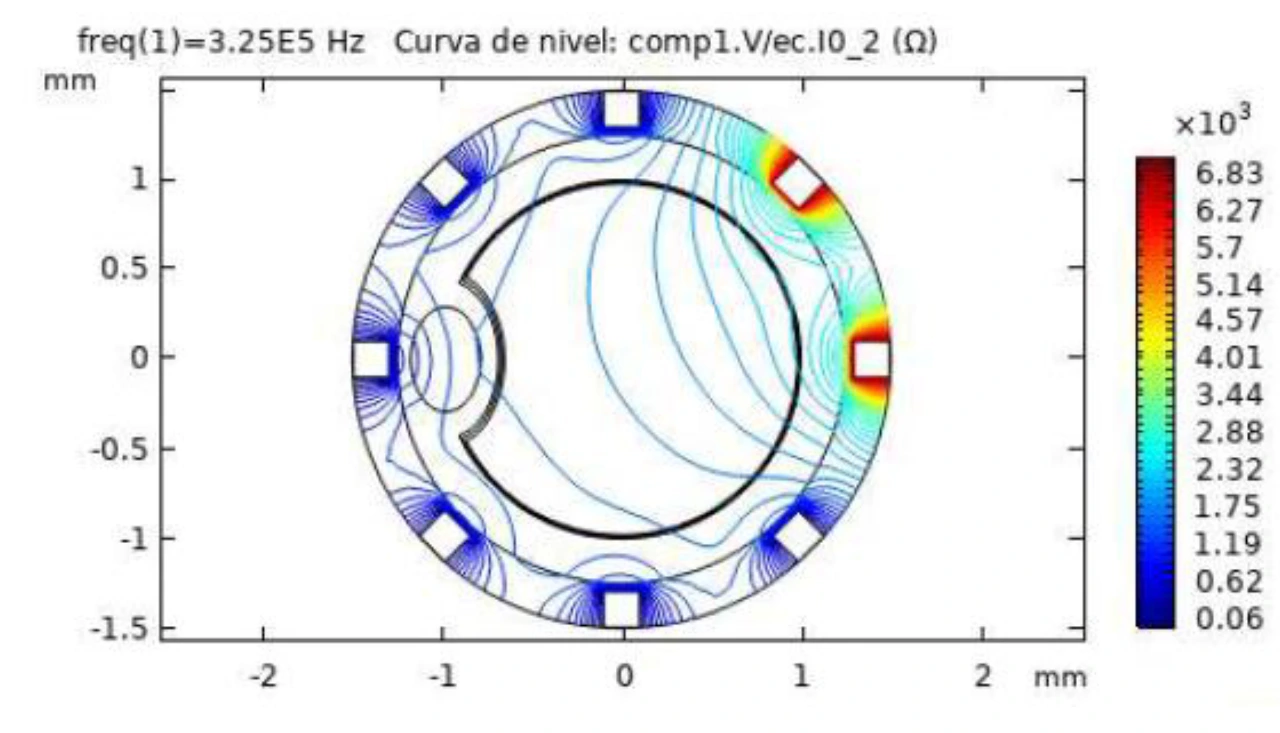
Computed impedance contours in an arterial cross-section with a simulated plaque.
Computed impedance contours in an arterial cross-section with a simulated plaque. Rodríguez et al. (2022) · CC BY 4.0

Impedance sensing in implants

Two collaborations use electrical measurements to study different interfaces: blood flowing through a stent and cells growing on porous titanium.

Where is the narrowing in a stent? · Measuring the surface of porous titanium

Read the study